
Electronic components

Container

Optical Display

Can Making

Electronic components
Container
Optical Display
Can Making
Solutions
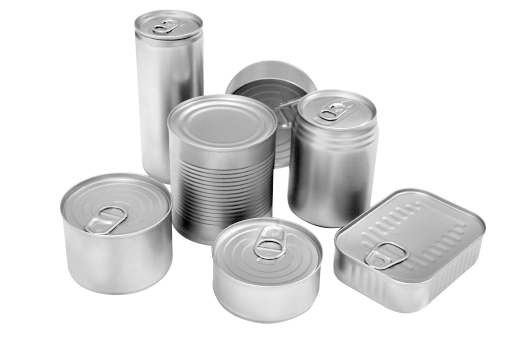
Easy Open End
Producing easy-open lids requires high-speed and high-precision stamping presses that can operate 24/7. INGYU's advanced solutions include thermal control systems and quick slide lifting devices, which can help customers solve die problems efficiently and reduce production line downtime.
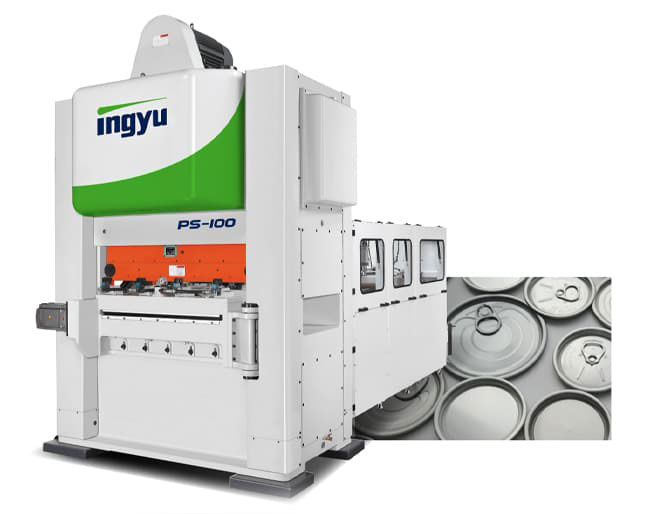
PS100, Sheet Feeding Press, helps users to make high-quality shells. In addition, it extends the die life time thanks to the precision guiding structure. INGYU offers high-speed presses for both coil shell and sheet feeding systems to meet varying production requirements.
| Model | PS-100 | |
|---|---|---|
| Capacity | ton | 100 |
| Stroke | mm | 50 |
| Speed | spm | 300 |
| Bed area | mm | 1300 x 800 |
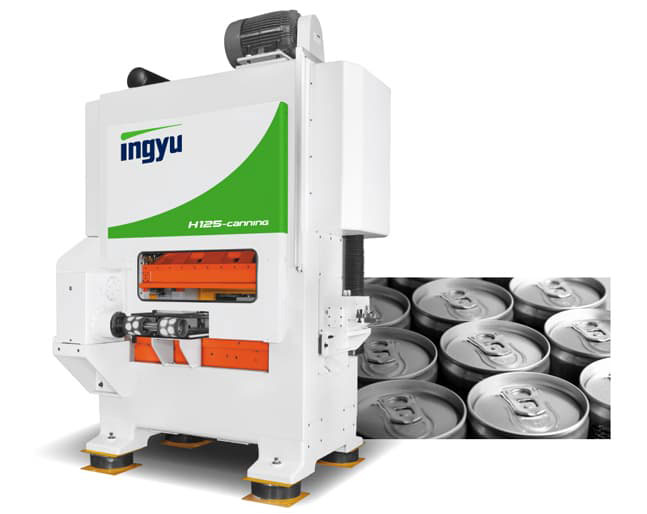
| Model | H125-Canning | |
|---|---|---|
| Capacity | ton | 125 |
| Stroke | mm | 40 |
| Speed | spm | 700 |
| Bed area | mm | 1400 x 1000 |
ING YU | Easy-Open End Press Technology & Performance
At production speeds of 400–600+ strokes per minute (SPM), how does ING YU maintain a consistent Bottom Dead Center (BDC) position despite heat buildup and vibration? How precisely can the press control score residual thickness in easy-open end production?

ING YU’s rigid press structure and precision guiding system are designed to minimize deflection and vibration during high-speed operation.
By maintaining consistent BDC positioning, the press helps achieve uniform scoring and reduces the risk of defects caused by excessive or insufficient score depth.
This consistency is especially important for maintaining reliable production quality over long operating periods.
Multi-station tooling for high-speed easy-open end production represents a significant investment. How does ING YU’s press design help reduce die wear, extend tooling life, and lower maintenance costs?
Vibration and frame deflection during high-speed stamping can accelerate die wear and affect production accuracy.
ING YU’s rigid frame construction and precision guiding system help keep the tooling properly aligned and minimize unwanted movement during operation. This reduces stress on the tooling, helps extend die life, and lowers the frequency of maintenance.
A more stable press also contributes to consistent product quality and lower operating costs over time.
Score-related leaks (leakers) and broken tabs are among the most serious quality issues in easy-open end production. How does ING YU help manufacturers maintain consistent product quality and minimize defects during continuous, 24-hour operation?
Inconsistent BDC positioning and excessive frame deflection can contribute to variations in scoring quality, increasing the risk of leaks and tab failures.
ING YU’s press design focuses on stable BDC positioning and minimizing deformation under load to support consistent scoring during high-speed production.
By reducing unwanted movement and variations in press operation, the machine helps manufacturers improve product consistency, reduce defects, and minimize unexpected production interruptions.
As beverage packaging manufacturers move toward thinner, lighter materials, accurate feeding and positioning become increasingly important. How does ING YU help minimize material misalignment and reduce scrap when processing thin metal sheets?
Thinner materials require precise feeding and stable press operation to prevent misalignment and material waste.
ING YU’s press can be integrated with a precision feeding system to ensure consistent material positioning, even at high production speeds.
Combined with stable press operation and repeatable stamping accuracy, this helps manufacturers reduce scrap, improve material utilization, and maintain production efficiency.
For high-volume manufacturers, every minute of downtime affects productivity. How does ING YU’s press design make die changes, maintenance, and troubleshooting easier while minimizing production interruptions?
ING YU designs its presses with accessibility and ease of maintenance in mind.
The Slide Quick Access feature allows the slide to be raised quickly by 70 mm, providing additional clearance for die inspection, die changes, and clearing die jams. This makes maintenance and troubleshooting easier and helps operators return the press to production sooner.
The press’s drive system and clutch-brake design also play an important role in maintaining reliable operation during extended production runs. Together, these features help manufacturers reduce downtime and maintain consistent output.
How does ING YU combine energy-efficient operation with reliable performance in high-speed easy-open end production? What after-sales support is available to customers outside Taiwan?
ING YU focuses on efficient mechanical design, flywheel performance, and proper machine balancing to minimize unnecessary vibration and energy losses during operation.
A well-balanced press operates more smoothly, supporting stable production while making efficient use of energy.
For international customers, ING YU provides responsive after-sales service and technical assistance through its overseas agents and online support channels. With a network connection and customer authorization, our technical team can remotely access and inspect the machine’s electrical control system, assist with fault diagnosis, and provide online troubleshooting support. This helps customers resolve issues more efficiently and minimize production downtime.